Beginner Air Fryer Accessories for a Simple First Setup
Beginner air fryer accessories are a small, fit-dependent set of tools that support early air fryer use by reducing mess, improving handling, and protecting the basket while keeping the setup simple before any expansion.
The selection of beginner air fryer accessories depends on practical conditions such as basket size and shape, cooking habits, and how much cleanup effort is acceptable. In most cases, a starter setup may include items like liners, tongs, oil sprayers, racks, or cleaning brushes, but their actual usefulness varies by how the air fryer is used and how much flexibility is needed in early cooking routines.
- Fit and basket compatibility based on size and internal shape
- Material suitability for heat exposure and food contact safety
- Cleaning burden and how easily the accessory can be maintained
- Cooking usefulness for early-stage meals and simple preparation needs
- Overbuying risk when accessories are added before actual need is clear
What beginner air fryer accessories should solve first
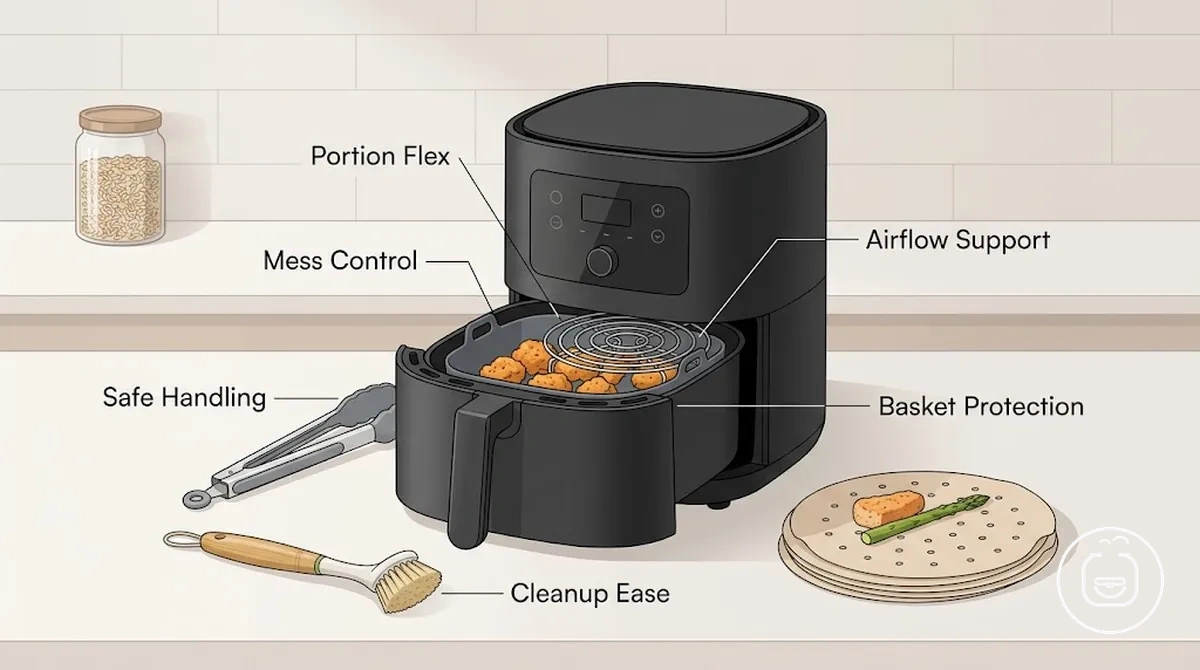
Beginner air fryer accessories should solve basic cooking, handling, cleanup, and fit problems before adding variety, because the starter setup works best when it reduces everyday friction rather than expanding the cooking system too early. These accessories support early use where mess control, safe food handling, basket protection, airflow balance, portion flexibility, and cleanup effort create the most immediate practical challenges in a new air fryer setup.
The selection frame should stay connected to the broader usage context found in the air fryer accessories hub, where beginner needs are treated as part of a wider accessory ecosystem rather than a fixed kit.
- Mess control during early cooking and oil or crumb handling
- Safe food handling when removing or turning hot items
- Basket protection to reduce wear and sticking in early use
- Airflow support where spacing or elevation may affect cooking consistency
- Portion flexibility for small or irregular beginner batches
- Cleanup effort reduction for faster post-cooking maintenance
The scope also excludes recipes, air fryer settings, and appliance buying decisions unless they directly influence accessory choice, keeping the focus on practical accessory-related problems rather than broader cooking system decisions. A clearer breakdown of main accessory types helps separate handling tools, protective elements, and cleanup aids without merging them into a single buying category.
A simple first accessory setup for new air fryer users
A simple first accessory setup for new air fryer users depends on cleanup needs, handling comfort, and cooking range, because the right starter combination is not universal and changes with basket design, usage habits, and how much friction the user wants to reduce in early cooking. The main goal is to avoid overbuilding a setup while still covering the basic points where cooking, handling, and cleanup tend to create the most immediate difficulty.
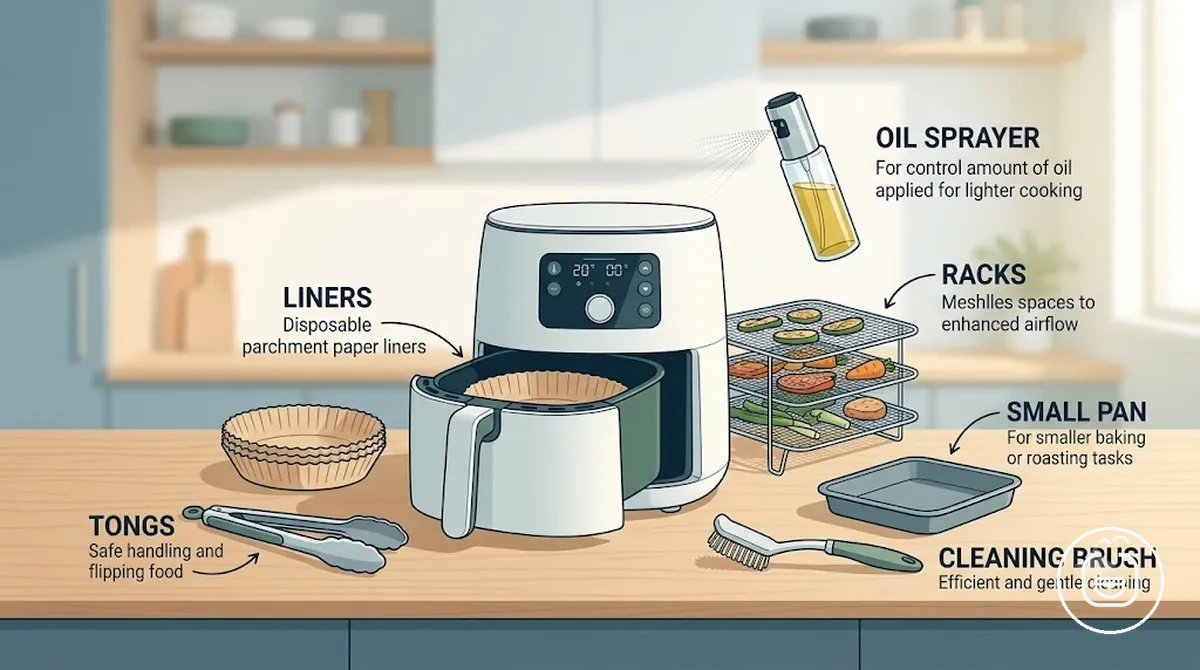
The starter setup can be understood by grouping accessories into functional needs rather than product types, so the selection stays aligned with real usage problems instead of becoming a full equipment list.
- Cleanup-focused tools such as liners and brushes for reducing residue buildup
- Handling support tools like tongs for safer movement of hot food
- Cooking control aids such as oil sprayers for light surface coverage
- Airflow and structure tools like racks and small pans for spacing or separation
The decision stage often benefits from reviewing essential accessories to consider, especially when choosing between minimal setups and slightly expanded starter combinations based on how often cleanup effort, handling difficulty, or cooking variety becomes the main constraint in early use.
Liners for easier cleanup
Liners for easier cleanup are a beginner air fryer option that helps reduce stuck-on food and simplifies post-cooking cleaning by adding a protective layer inside the basket, with performance depending on basket fit and how much airflow space remains around the food.
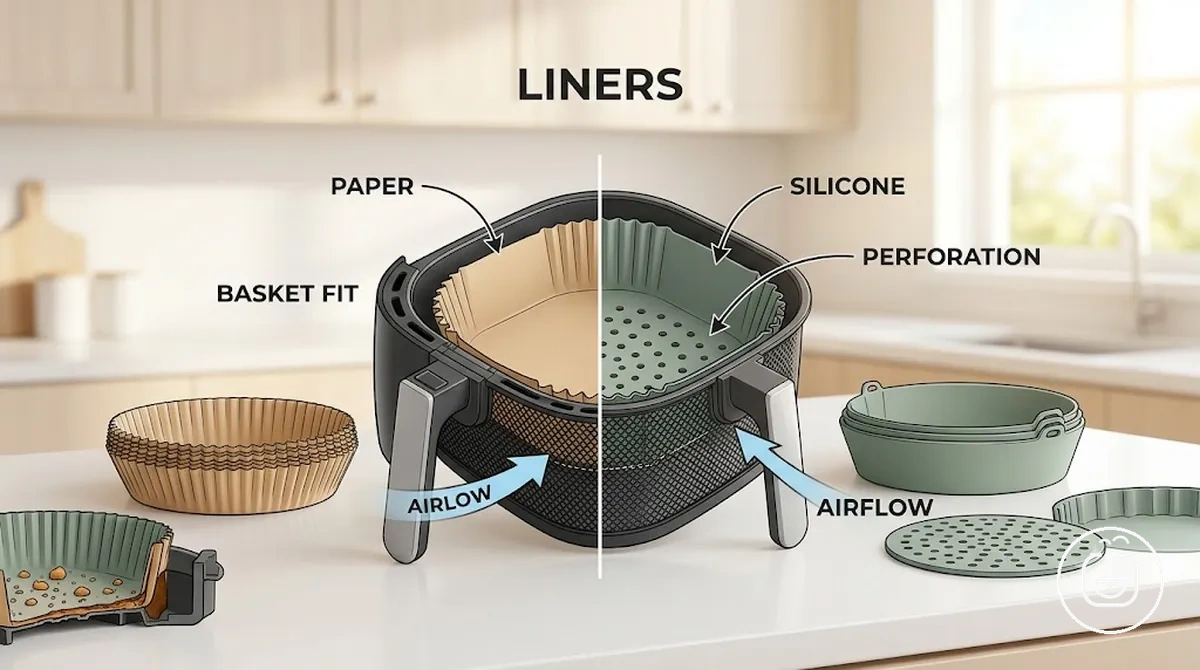
Liner choice affects both cleanup effort and airflow balance, so selection depends on basket fit, perforation alignment, and how much residue control is needed during early use.
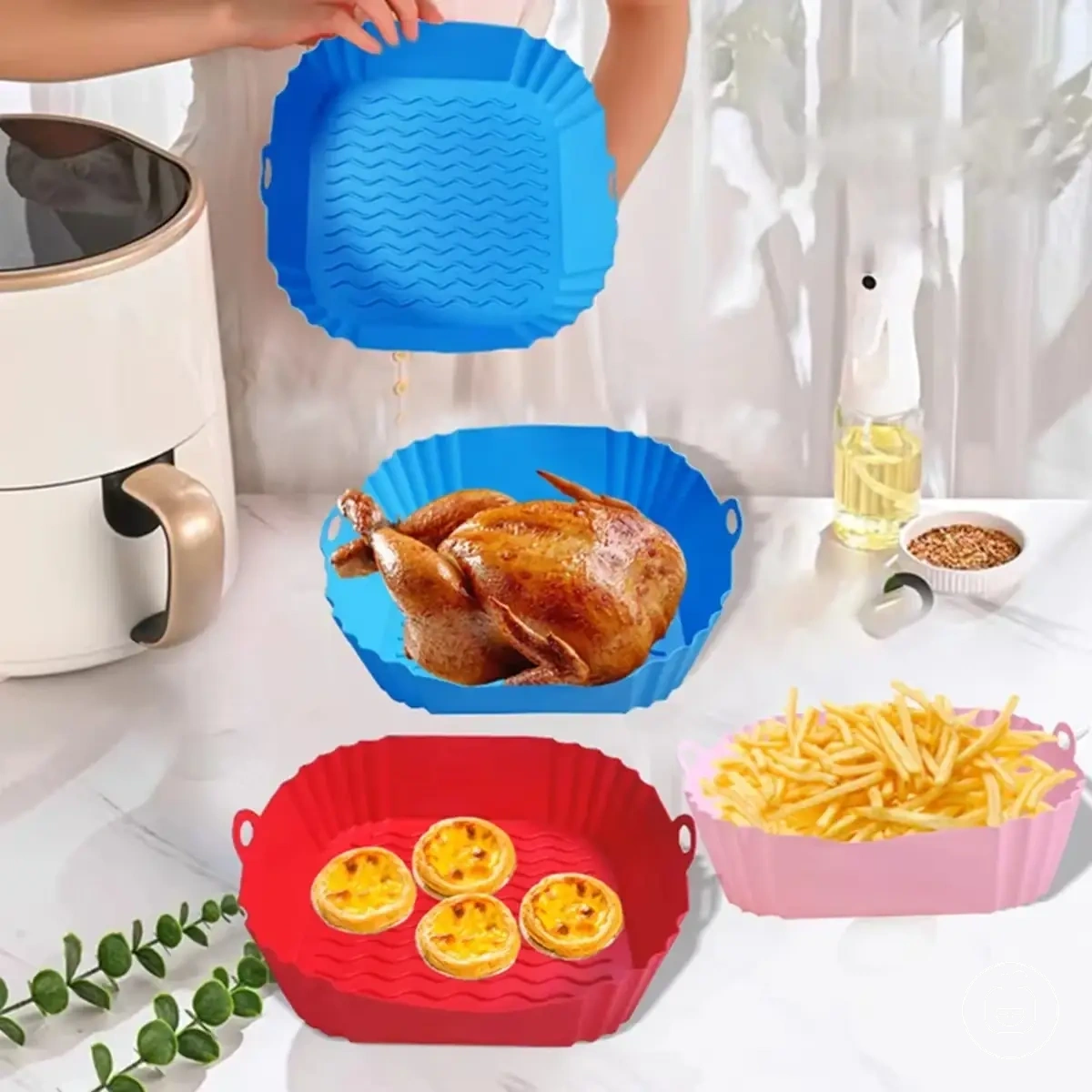
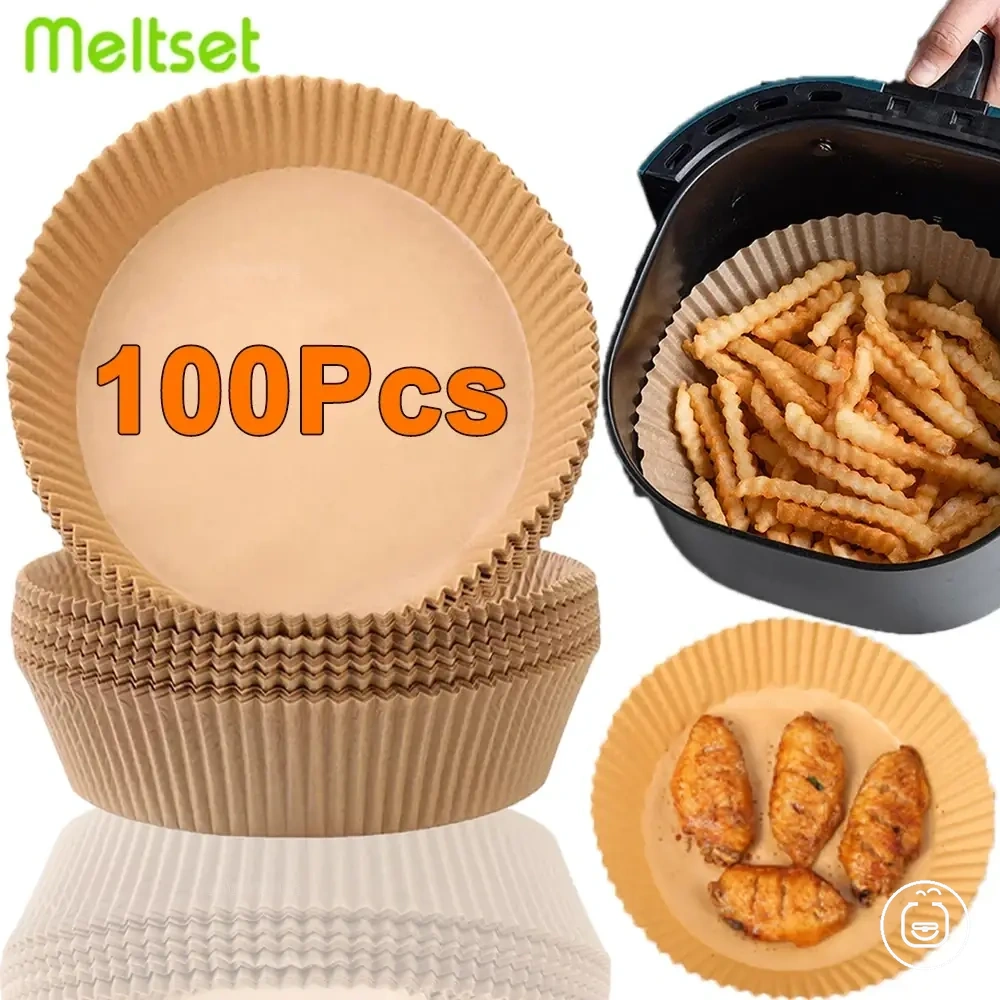
Paper vs Silicone Paper liners usually support quicker cleanup and single-use convenience, while silicone liners are often reusable and provide more structure, with differences depending on perforation quality, basket fit, heat tolerance, and cleaning frequency needs in regular use.
Liners should not block airflow or come into contact with heating elements unless the air fryer manual explicitly supports that setup, since improper placement may affect cooking consistency or safety.
Tongs and oil sprayers for everyday control
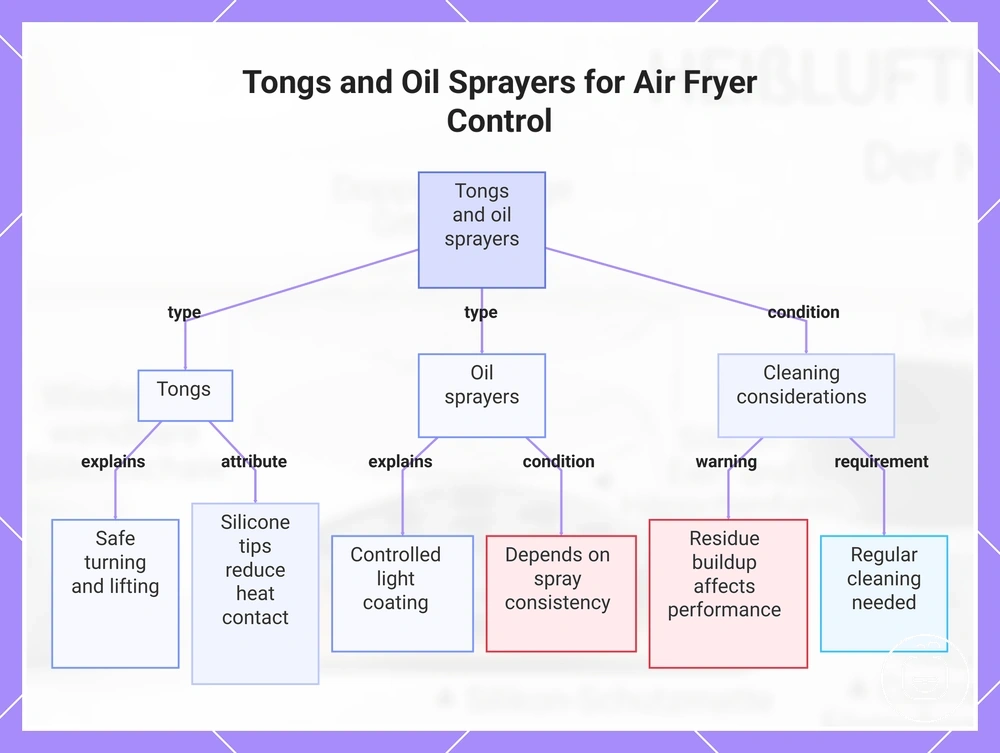
Tongs and oil sprayers for everyday control are handling and surface-control tools used in beginner air fryer cooking to improve grip stability and manage light coating where needed, with their usefulness depending on food type, basket layout, and cooking sensitivity rather than being required equipment.
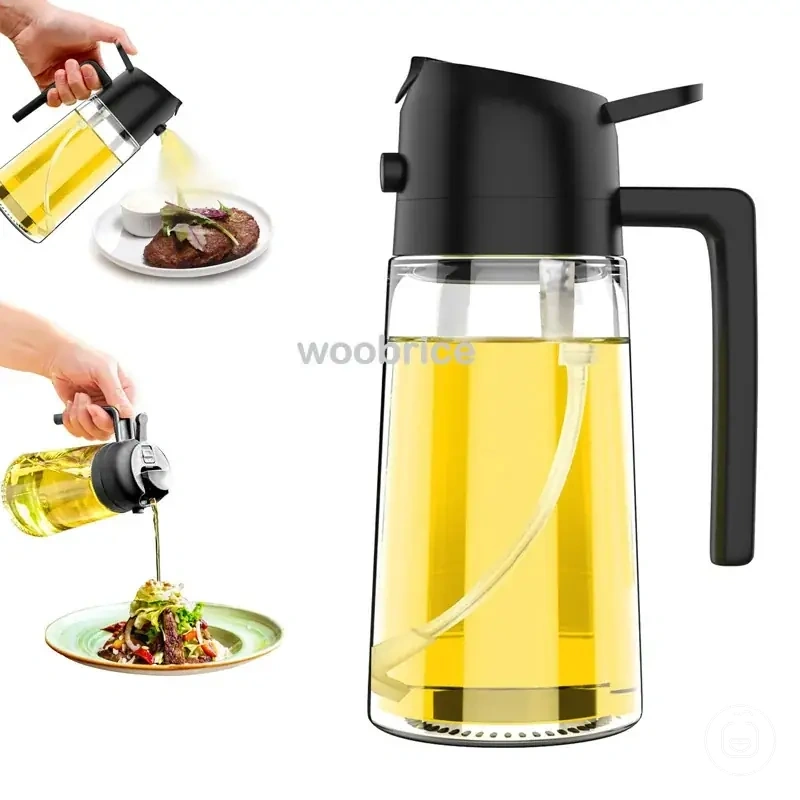
Tongs mainly support safe turning and lifting of hot food, especially when silicone tips and longer handles reduce direct contact with hot surfaces, while oil sprayers help distribute a controlled, light coating when texture adjustment is needed, without replacing recipe-based oil decisions or cooking judgment.
- Grip control Tongs with heat-resistant silicone tips can improve handling stability when food is soft or basket space is tight
- Coating control Oil sprayers can support more even light oil distribution depending on spray consistency and nozzle performance
- Cleaning considerations Both tools may require regular cleaning since residue buildup can affect grip and spray performance over time
For example, using tongs can reduce breakage when flipping delicate items, while a light oil spray can help reduce uneven surface dryness, but both outcomes still depend on food type and user judgment rather than guaranteed results.
This chart shows the main functions and maintenance needs of tongs and oil sprayers as everyday control tools in air fryer cooking.
Racks and small pans for simple cooking range
Racks and small pans for simple cooking range are optional air fryer accessories that expand cooking flexibility by adjusting available space, airflow exposure, and food shape handling, and they are typically introduced after basic cleanup and handling needs are already covered.
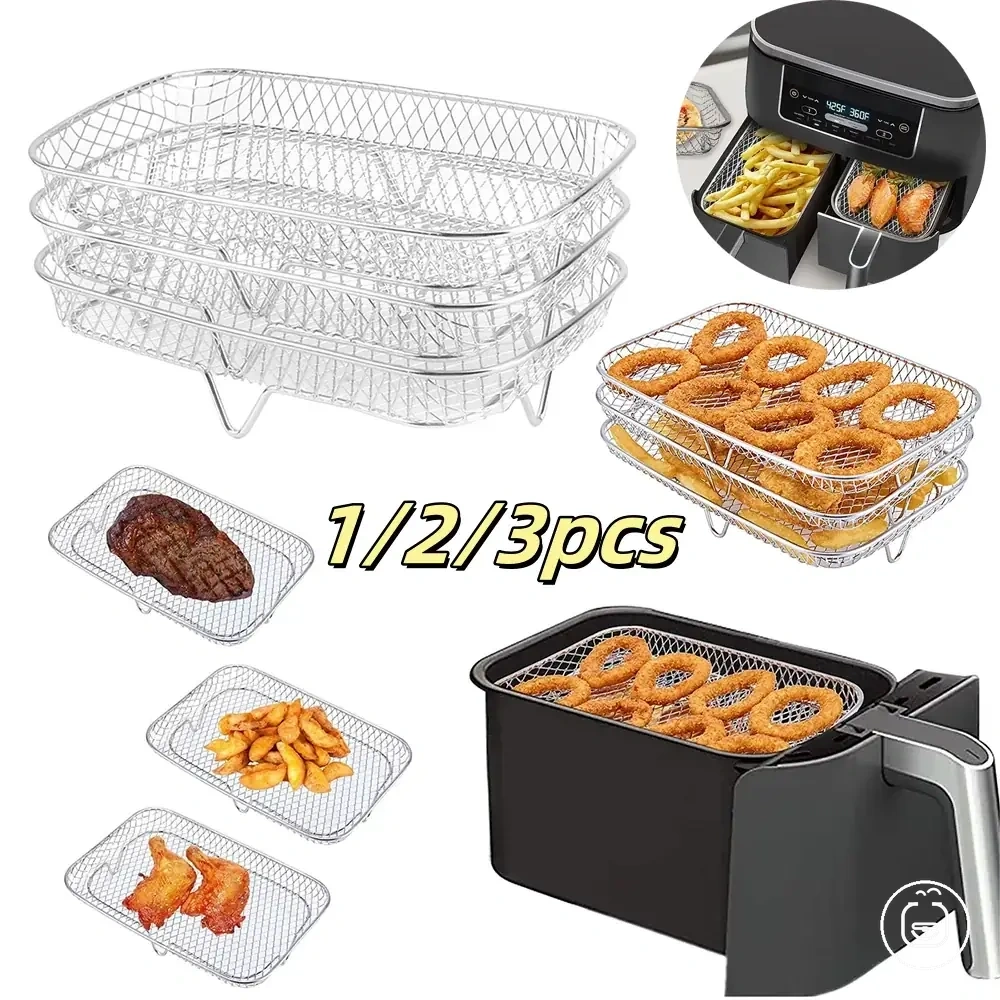
Their effectiveness depends mainly on fit and internal clearance, since rack height, pan diameter, and basket spacing can influence airflow and usable cooking area, while improper fit may limit consistency rather than improve results.
| Factor | What it affects | Decision relevance |
|---|---|---|
| Rack height | Airflow layering | May change crisping or reheating behavior depending on spacing |
| Pan diameter | Cooking surface usage | Can limit or expand usable basket area depending on fit |
| Basket clearance | Safe placement | Insufficient clearance may restrict multi-level use |
| Airflow exposure | Texture consistency | Varies by load and arrangement inside the basket |
In practice, racks may support light reheating or separation of food layers, while small pans can enable limited baking-style use cases, but outcomes vary by air fryer model, load size, and airflow conditions rather than producing consistent results across all recipes.
Cleaning brushes as low-risk support tools
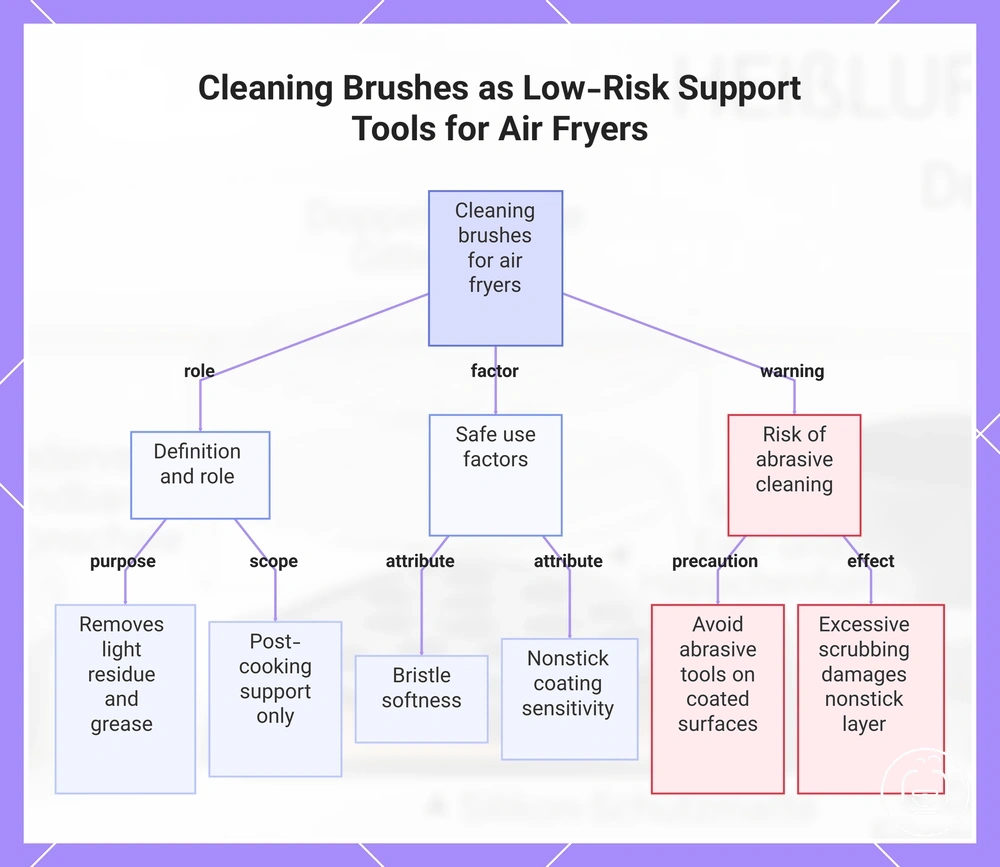
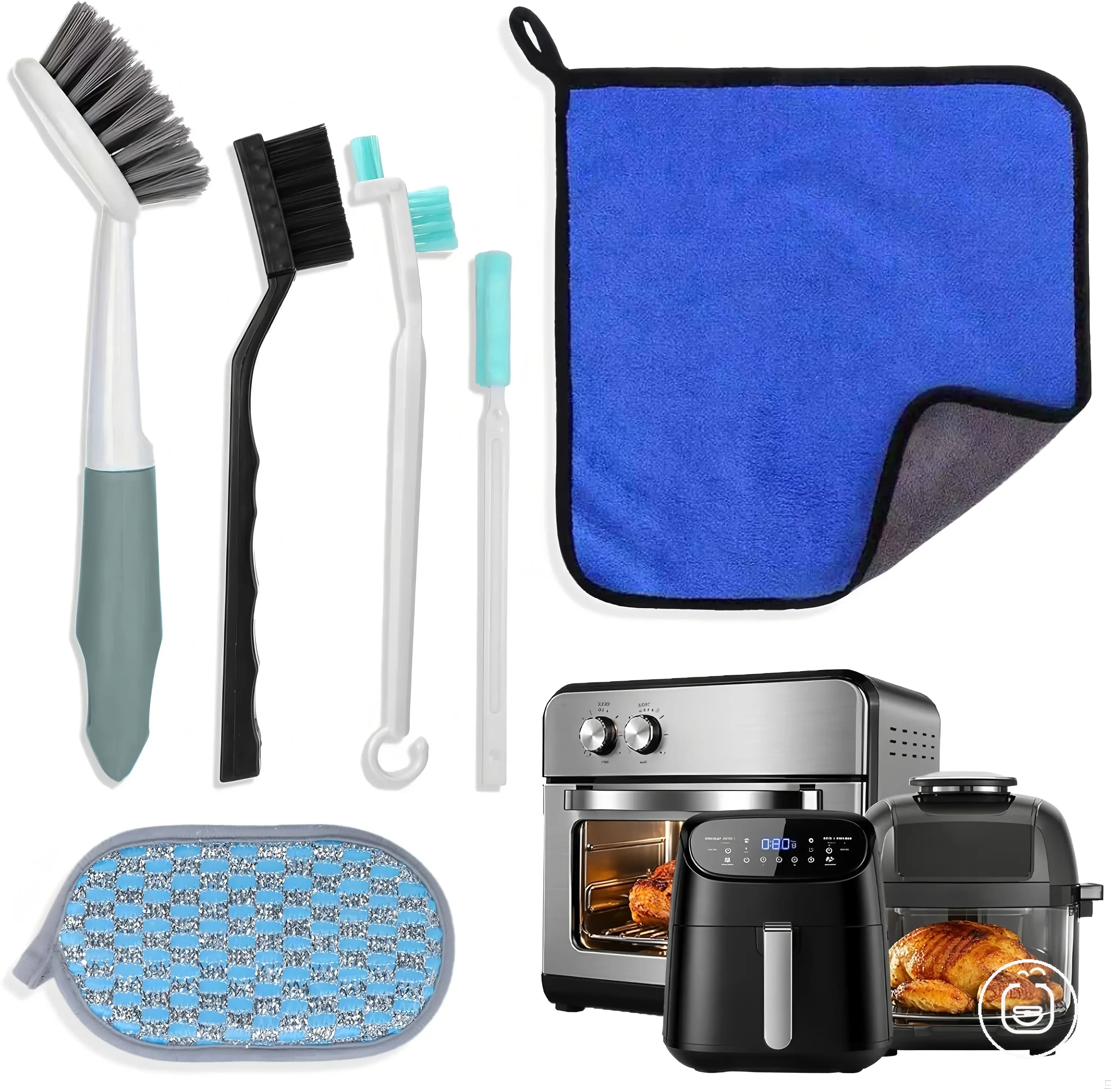
Cleaning brushes as low-risk support tools are maintenance-focused accessories used to remove light residue and grease after air fryer use without affecting cooking performance, and they are positioned strictly as post-cooking support rather than cooking-related tools.
Their safe use depends on brush design and surface compatibility, especially where bristle softness, handle length, and nonstick coating sensitivity determine whether cleaning remains controlled or becomes unnecessarily abrasive.
- Bristle softness Softer bristles are generally preferred to reduce coating wear during routine cleaning
- Handle length Longer handles can improve reach and reduce direct contact with hot or greasy surfaces
- Nonstick safety Brush materials should be compatible with coated baskets to avoid surface damage over time
- Grease removal Cleaning effectiveness may vary depending on residue level and cleaning frequency
- Drying needs Proper drying is typically required to maintain hygiene and prevent buildup after use
Avoid using abrasive tools on coated surfaces, since excessive scrubbing can gradually wear down the nonstick layer instead of improving cleaning outcomes.
This chart explains the definition, safe use factors, and key warning for air fryer cleaning brushes as low-risk post-cooking support tools.
Fit and safety checks before buying beginner accessories
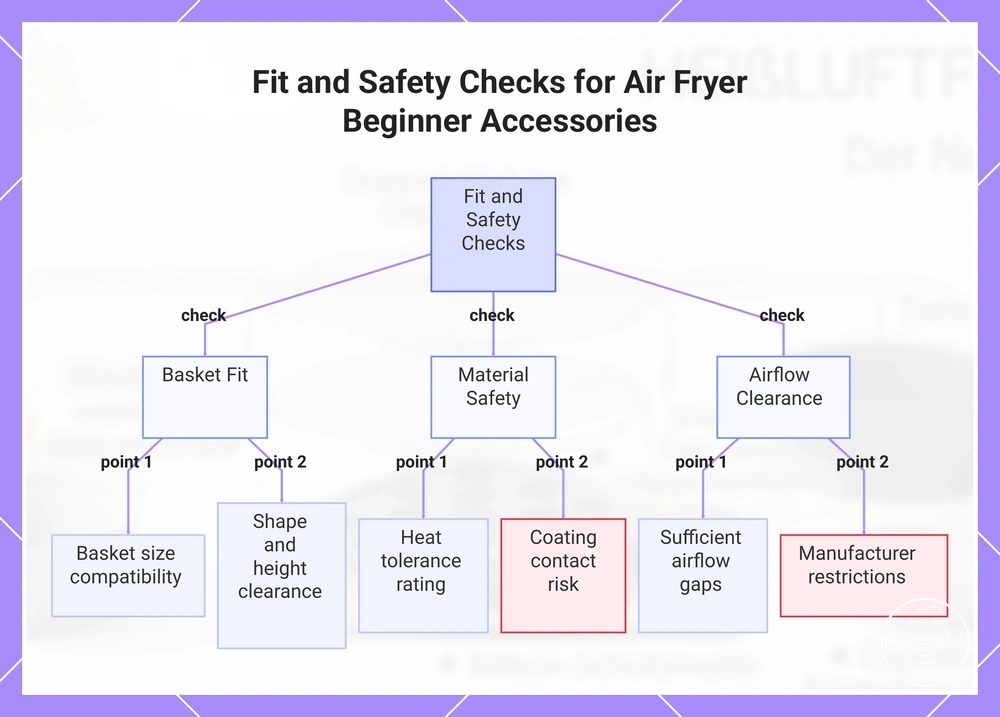
Beginner accessories should be checked for fit, heat safety, airflow clearance, and cleaning compatibility before purchase because incorrect sizing or unsafe materials can make otherwise useful tools inconvenient or risky.
These checks depend on basket size, basket shape, accessory height, airflow gaps, material rating, coating contact, dishwasher suitability, and manual restrictions; to structure this correctly it helps to check accessory fit first.
Wrong fit or unsuitable materials can interfere with airflow or damage coatings, so evaluation must stay focused on how the accessory interacts with the air fryer rather than its standalone usefulness.
- Basket size Compatibility with internal cooking space limits
- Basket shape Fit variation depending on round, square, or compact designs
- Accessory height Clearance needed for safe airflow circulation
- Airflow gaps Space required to maintain even heat distribution
- Material rating Heat tolerance and food-contact safety level
- Coating contact Risk level for nonstick surface wear
- Dishwasher suitability Cleaning compatibility based on material limits
- Manual restrictions Manufacturer-specific usage limitations
Must-check conditions such as basket fit, material safety, and airflow clearance determine basic usability, while convenience factors like dishwasher compatibility are secondary; reviewing a buying checklist for beginners helps translate these criteria into a final decision.
This chart shows the essential fit, material, and airflow checks to evaluate before buying beginner air fryer accessories.
Basket size, shape, and airflow clearance
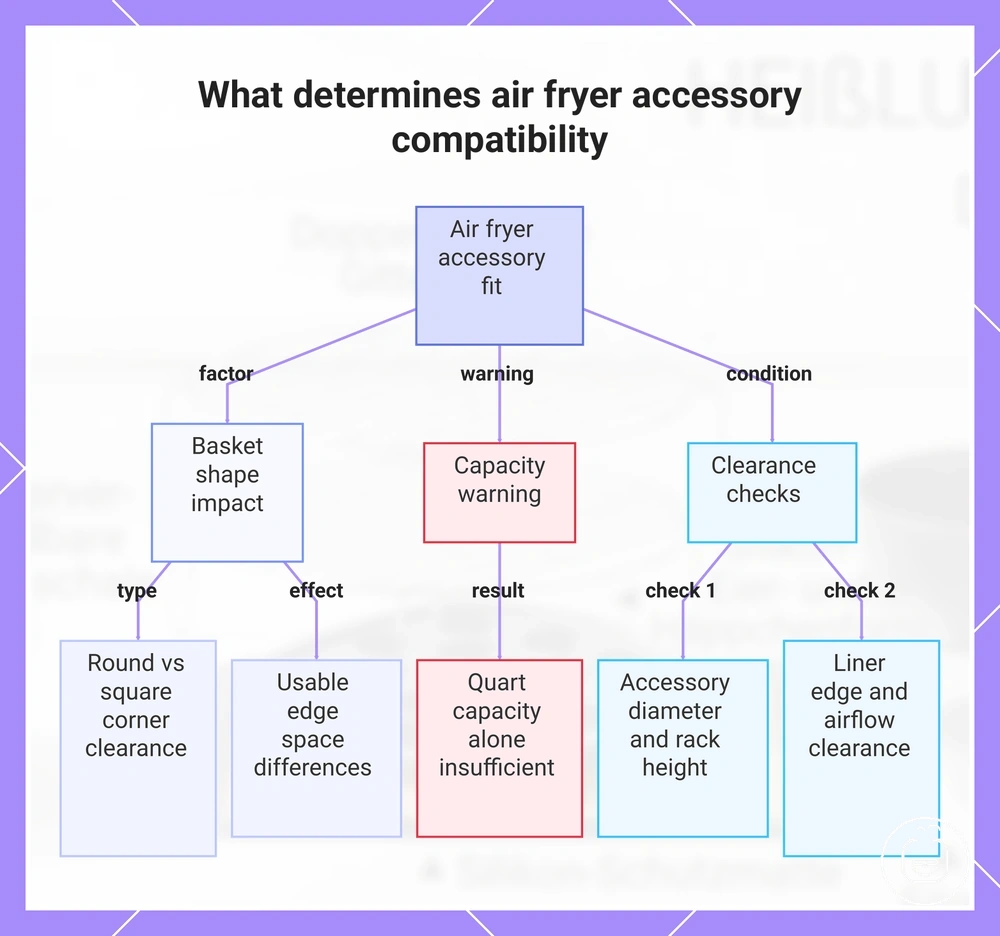
Basket size, shape, and airflow clearance determine whether a beginner accessory can fit and function inside the air fryer without crowding, and compatibility depends on measured internal dimensions rather than a universal assumption.
Round and square baskets distribute usable space differently, so an accessory that fits one design may not fit another even at similar capacity; quart capacity alone does not confirm usable fit, since accessory diameter, rack height, liner edge clearance, and airflow exposure must align with the actual internal chamber geometry.
- Round vs square baskets Shape changes corner clearance and usable edge space
- Quart capacity Indicates volume but does not guarantee accessory fit
- Accessory diameter Must match internal width to avoid crowding
- Rack height Must leave vertical space for airflow movement
- Liner edge clearance Must not interfere with airflow or heating zones
- Airflow exposure Must remain sufficient for even circulation around food
Because these conditions vary by air fryer model, usable compatibility depends on the combination of basket geometry and clearance rather than capacity labels or general sizing assumptions.
This chart shows the key conditions for accessory fit inside an air fryer, including basket shape impact, capacity limitations, and clearance requirements.
Heat-safe materials and nonstick protection
Heat-safe materials and nonstick protection require verifying both temperature tolerance and surface-contact safety, since an accessory may withstand heat but still damage the basket coating if the material is not suitable for nonstick use.
Heat resistance and coating safety must be evaluated separately. Silicone, parchment, stainless steel, and coated surfaces behave differently under airflow and direct contact, and labels such as “BPA-free” or “heat-safe” should be treated as conditional indicators that still depend on manufacturer specifications rather than standalone proof of safety.
- Silicone Often heat-tolerant and flexible, but quality and certification can influence reliability in use
- Parchment Used for separation and cleanup, but must remain stable under airflow and heat conditions
- Stainless steel Structurally strong but may increase scratch risk when in direct contact with coatings
- Nonstick coatings Require careful handling to avoid gradual surface wear from repeated contact
- BPA-free claims Depend on manufacturer labeling and should not be treated as full safety validation on their own
- Scratch risk Varies with edge design, hardness, and pressure during use
Heat-safe performance and coating-safe handling should be balanced, since thermal tolerance alone does not guarantee that an accessory will be safe for long-term contact with nonstick surfaces.
Beginner accessory sets versus individual starter pieces
Beginner accessory sets versus individual starter pieces depend on fit certainty and actual usage needs, since sets can include unused or mismatched items while individual pieces focus only on what is required for early cooking tasks.
The decision usually depends on fit certainty, duplicate items, cooking habits, and how many pieces may remain unused, which directly affects practical value more than total quantity.
| Factor | Accessory sets | Individual starter pieces |
|---|---|---|
| Set contents | Pre-grouped items that may include extra or unused tools | Selected items chosen based on specific need |
| Use alignment | May include items not used in daily cooking routines | Focused only on required functions |
| Fit risk | Depends on whether all items match basket size and shape | Lower when each piece is selected for compatibility |
| Storage burden | Higher when multiple unused items accumulate | Lower due to minimal selection |
| Replacement flexibility | Limited when one item becomes unsuitable | Easier to replace or swap individual items |
| Cost per used item | Varies based on how many items are actually used | More efficient when every item has a clear purpose |
Accessory sets can work well when the basket fit is already well understood and most included items match expected cooking needs, reducing the need for separate selection.
Individual starter pieces are often safer when fit is uncertain or cooking habits are still developing, since each item can be chosen based on specific requirement instead of bundled assumptions.
Overall value depends on how many items are actually used, since unused or poorly fitting pieces reduce practical benefit regardless of whether they come from a set or individual selection.
Here are product examples that may make comparison easier. Before buying, always review the compatibility criteria, essential features, and product details.
Accessories beginners can delay until cooking needs are clearer
Accessories beginners can delay depend on how often specific cooking patterns repeat and how clearly an air fryer workflow is established, since delaying non-essential items reduces clutter, fit mistakes, and unused purchases.
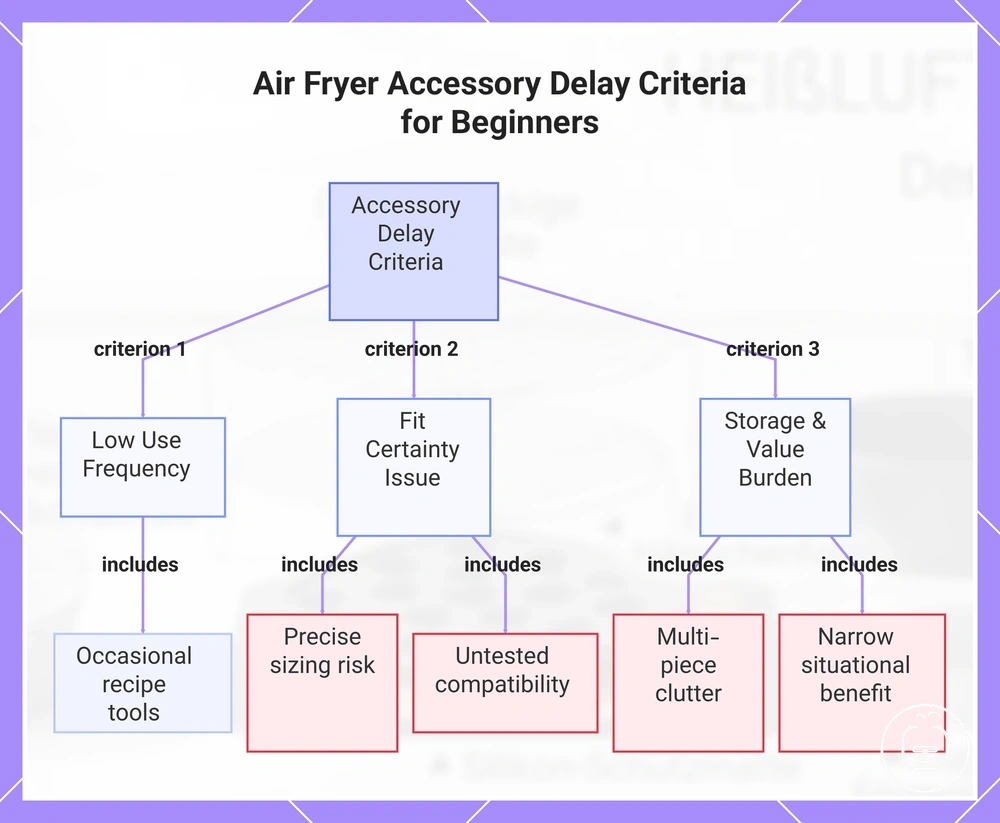
Delaying accessories is mainly a cost-value decision shaped by use frequency, fit certainty, and storage burden, especially when an item supports occasional recipes rather than repeated cooking habits.
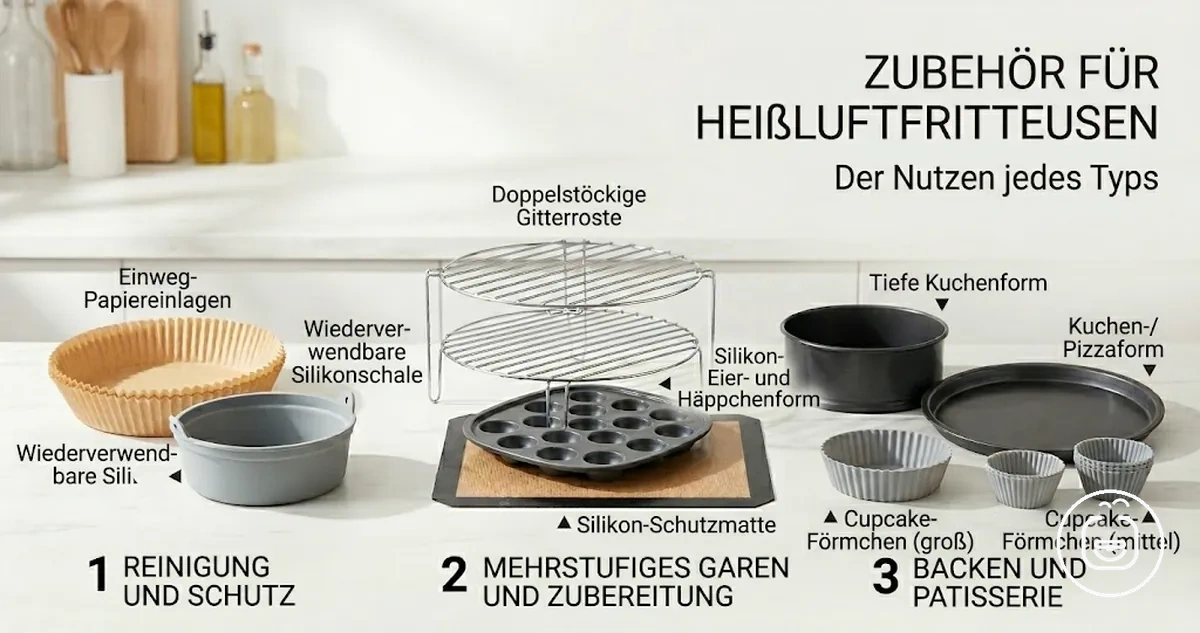
Specialty pans, skewers, multi-piece kits, duplicate liners, niche baking tools, and advanced racks are typically better postponed when cooking behavior is still inconsistent or when basket compatibility has not been tested through regular use.
Delay criteria overview
- Use frequency Items used rarely may not justify early adoption until repeat need is clear
- Fit certainty Accessories requiring precise sizing may lead to mismatch risk if chosen too early
- Storage burden Multi-piece or niche tools can increase clutter without immediate benefit
- Expected benefit Tools with narrow or situational use cases may add limited early value
For example, users who mostly prepare snacks or reheated foods may not immediately benefit from skewers or advanced baking tools, while those who regularly cook small proteins or baked items may later find some of these accessories more relevant once usage patterns become stable.
Here are product examples that may make comparison easier. Before buying, always review the compatibility criteria, essential features, and product details.
This chart shows the three main criteria that help beginners decide which air fryer accessories to postpone until their cooking habits become clear.