Air Fryer Accessory Maintenance and Replacement Guide
Air fryer accessory maintenance and replacement guide refers to a condition-based framework for evaluating how air fryer accessories are cleaned, inspected, maintained, and replaced based on their impact on food-contact safety, airflow reliability, and cooking consistency.
This maintenance approach covers routine care such as cleaning, drying, and inspection, alongside condition checks for fit, surface integrity, and structural stability. Replacement decisions depend on whether wear affects food-contact safety, airflow performance, or reliable cooking results rather than age alone or general assumptions.
What Air Fryer Accessory Maintenance Covers
Air fryer accessory maintenance includes cleaning, inspection, drying, storage, and replacement judgment for removable food-contact parts.
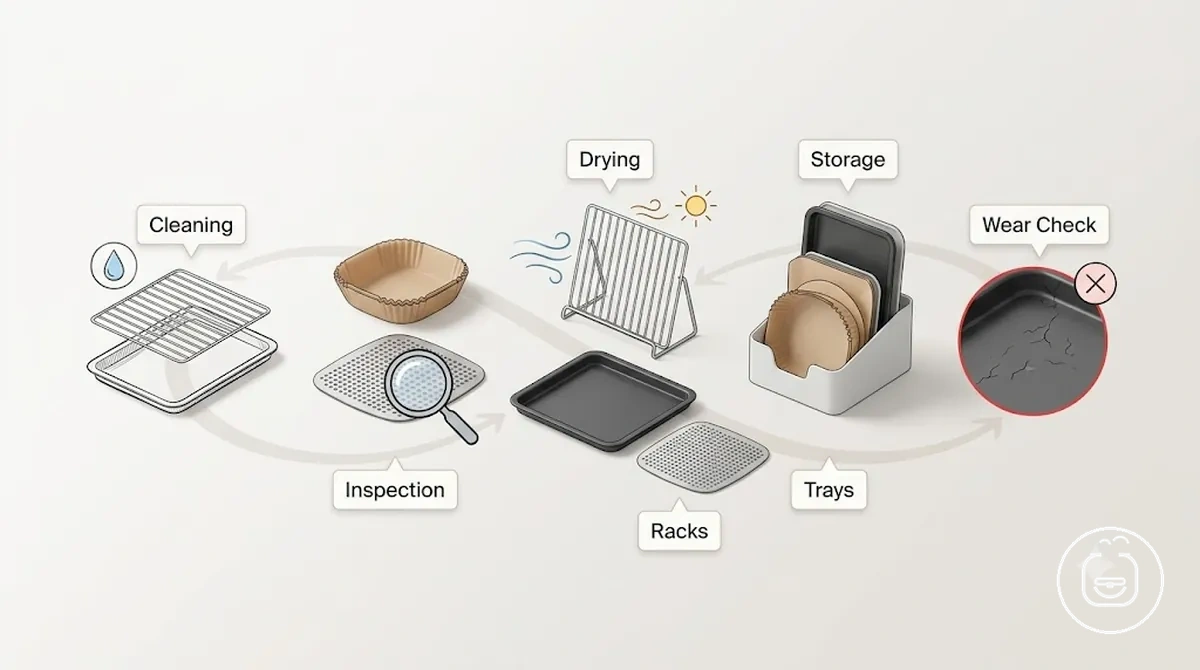
This maintenance scope applies to liners, racks, trays, pans, nonstick inserts, crisper plates, and cleaning tools, where each accessory type requires different levels of care depending on material condition, food-contact exposure, and structural stability. Routine checks focus on whether surfaces remain stable, cleanable, and properly fitted for consistent airflow and cooking performance.
Deep cleaning and grease removal are related maintenance activities, but they sit outside the main decision framework for judging whether an accessory should be maintained or replaced. Maintenance here focuses on condition evaluation and usability thresholds, which helps maintain consistent performance across accessory types. This connects directly to the broader context of the air fryer accessories guide.
How Long Air Fryer Accessories Last in Normal Use
Air fryer accessory lifespan depends on material type, coating quality, cleaning method, heat exposure, usage frequency, and visible wear condition. These factors interact differently for each accessory, so durability is assessed through condition changes rather than fixed time expectations.
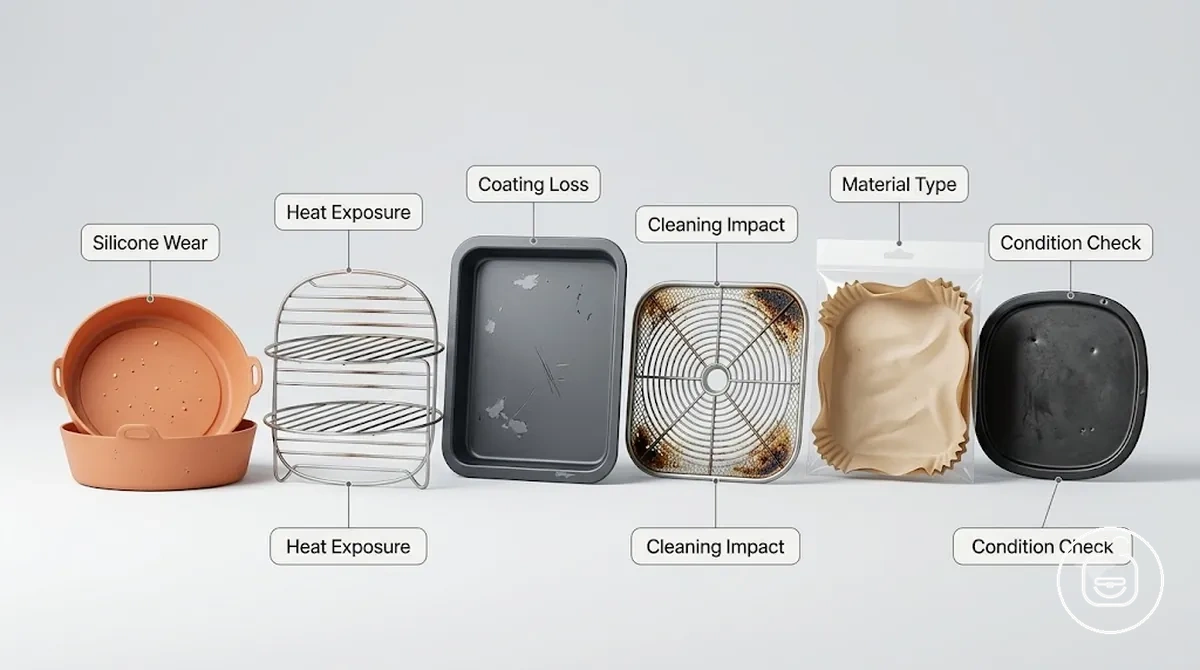
Lifespan is evaluated across accessory groups by focusing on key wear drivers and visible condition cues instead of time-based assumptions.
| Accessory Type | Wear Driver | Condition Cue | Maintenance or Replacement Outcome |
|---|---|---|---|
| Silicone liners | High heat cycles and repeated bending | Loss of flexibility or surface fatigue | Continue if stable, replace if structural weakness appears |
| Paper liners | Single-use exposure to heat and grease | Darkening or tearing after use | Dispose after use, replace each cycle |
| Racks and skewers | Heat exposure and abrasion from utensils | Coating wear or surface dulling | Maintain if intact, replace if coating degrades significantly |
| Trays and pans | Frequent cleaning and food acid exposure | Warping or coating breakdown | Maintain with care, replace if shape or coating is affected |
| Nonstick plates | Abrasive cleaning and high heat | Reduced nonstick performance | Use condition-based replacement when sticking increases |
Frequent dishwasher use, high-heat cooking, and abrasive cleaning can accelerate visible wear across accessory types, but replacement decisions depend on functional condition rather than appearance alone.
Wear Signs That Make Accessories Unsafe or Unreliable
Wear signs that make air fryer accessories unsafe or unreliable refer to visible or functional changes that can affect safety, fit, airflow, or cooking consistency. These signs help separate harmless surface aging from conditions that may reduce reliable performance during use.
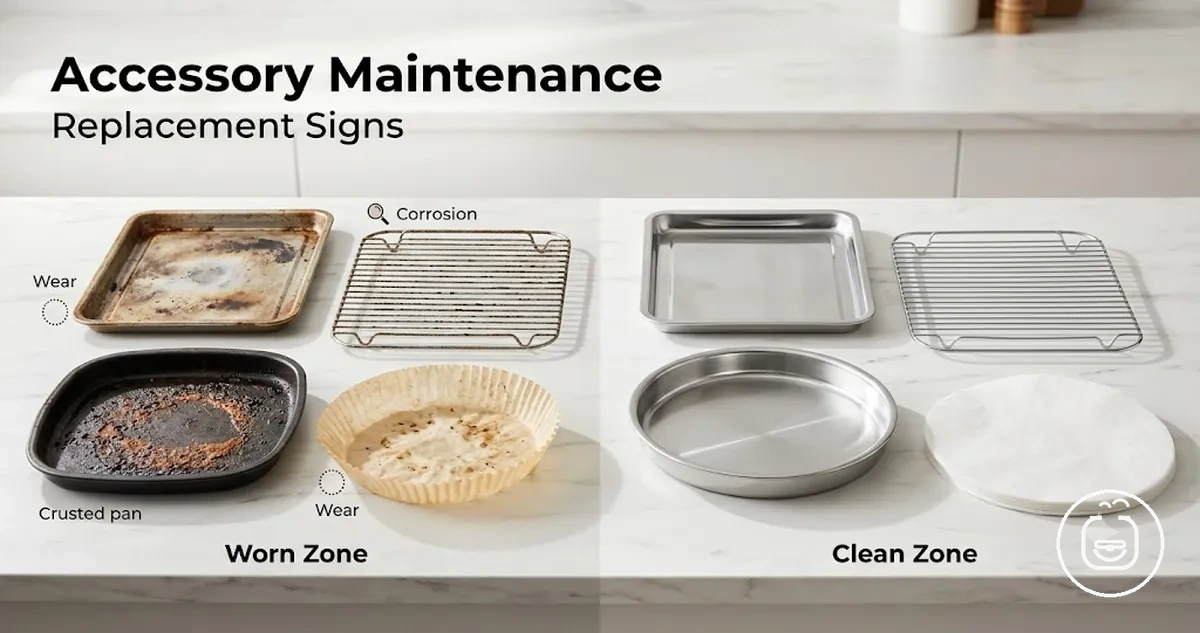
Visible wear cues such as cracks, deformation, or coating loss often indicate changes in structural stability, surface safety, or airflow behavior inside the basket.
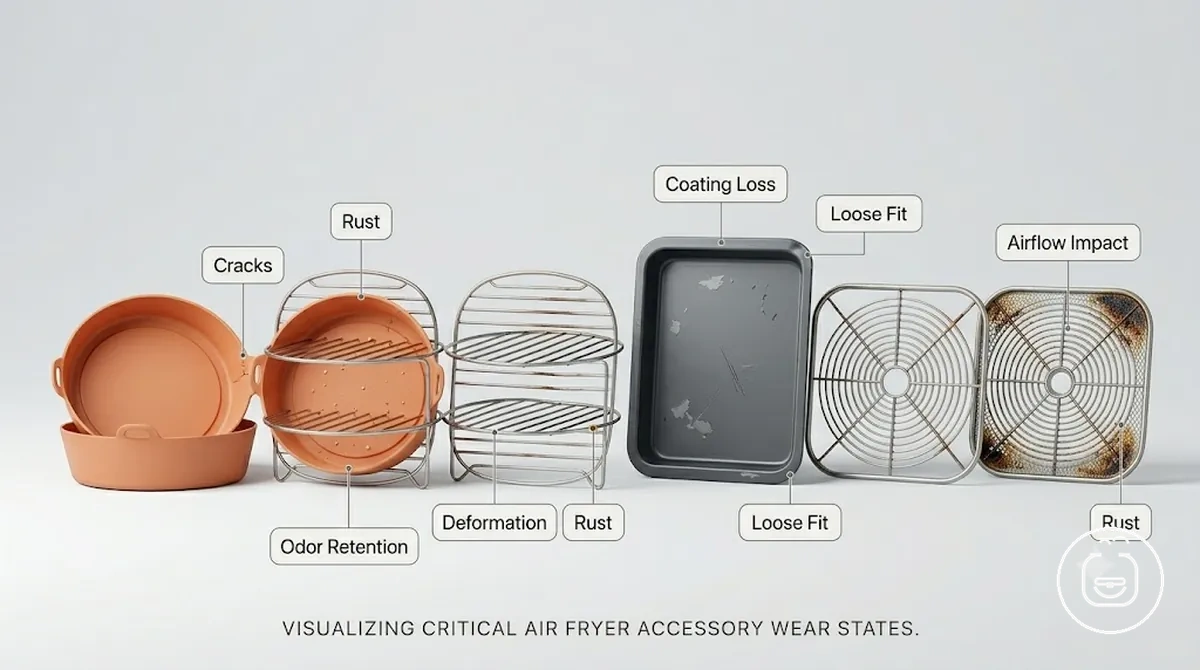
- Deformation or bending that affects basket fit
- Cracks that compromise structure or food contact surfaces
- Rust formation on metal components
- Flaking or peeling nonstick coating
- Loose or unstable parts during handling
- Residue buildup that does not clean off easily
- Persistent odor retention after cleaning
- Unstable basket alignment affecting airflow
Cosmetic changes such as light staining or surface dulling may not affect performance, while structural damage like cracks, coating loss, or deformation can influence food contact safety and airflow stability.
material wear and safety considerations help clarify how different materials respond to heat, cleaning, and repeated use when evaluating whether wear remains within acceptable limits.
Interpreting wear in context of fit, airflow, and structural integrity helps distinguish normal aging from conditions that may reduce reliability during cooking.
Surface damage, warping, rust, and loose parts
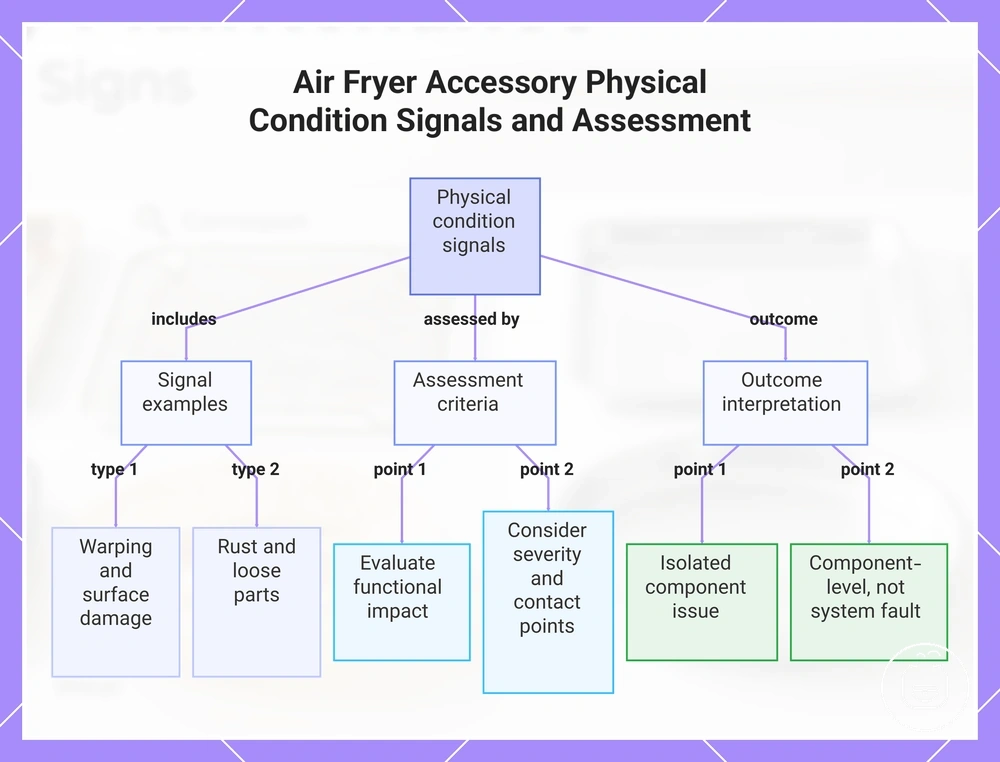
Surface damage, warping, rust, and loose parts describe physical condition signals that may indicate an air fryer accessory no longer sits, supports, or performs reliably during cooking. These signals are assessed based on how they affect fit, airflow consistency, and handling stability.
- Bent racks that reduce stable placement and disturb airflow spacing
- Warped trays that prevent even surface contact inside the basket
- Cracked liners that weaken structural integrity and food-contact stability
- Rust patches that indicate material degradation on metal components
- Loose feet that reduce stable positioning during cooking cycles
- Weakened handles that affect safe lifting and controlled handling
- Unstable inserts that shift during use and disrupt airflow paths
These conditions should be evaluated by their impact on function rather than appearance, since severity and contact points determine whether performance or safety is affected.
When a visible issue affects only the accessory itself and does not indicate a broader appliance malfunction, it is typically isolated to the part. This helps distinguish component-level issues from system-level faults, as outlined in troubleshooting accessory problems.
This chart explains the common physical condition signals that indicate an air fryer accessory may no longer be reliable, how to assess them by functional impact, and how to interpret whether the issue is isolated to the component.
Coating wear, deep scratches, and residue that will not clean off
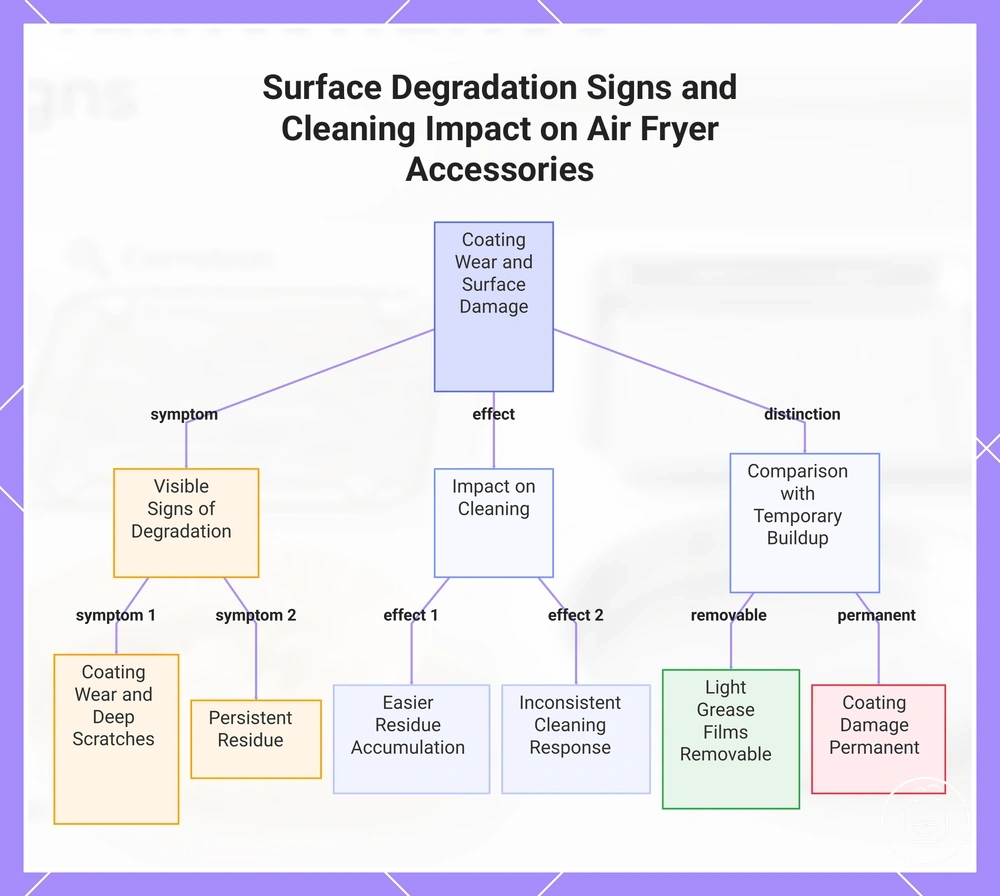
Coating wear, deep scratches, and residue that will not clean off refer to surface-condition changes that affect how air fryer accessories respond to cleaning and how stable their food-contact surfaces remain during repeated use. These signs help distinguish normal removable buildup from persistent surface degradation that does not respond to routine washing.
Coating condition is relevant because it determines whether marks and buildup are temporary or whether the surface layer itself has changed. When scratches or coating loss affect the top layer, residue may accumulate more easily and cleaning response may become inconsistent over time.
- Peeling nonstick coating that exposes underlying material layers
- Deep scratches that remain visible after standard cleaning
- Sticky residue that persists even after repeated washing
- Baked-on grease that resists normal cleaning effort
- Odor retention linked to surface absorption
- Rough surface texture that traps food particles
Some residue types, such as light grease films, may be removable with normal cleaning, while deeper scratches or coating damage typically remain unchanged, indicating a shift in surface integrity rather than temporary buildup.
This chart shows the common signs of surface degradation on air fryer accessories, how they affect cleaning, and how to distinguish permanent damage from temporary residue buildup.
Replacement Signs by Accessory Type
Replacement signs by accessory type describe condition-based thresholds that indicate when different air fryer accessories should be replaced. These thresholds vary because each accessory type reacts differently to heat exposure, food contact, and cleaning cycles, so replacement is evaluated by functional condition rather than uniform timing.
The comparison below organizes accessory types by their typical wear signs, how they respond to cleaning, and the condition point where replacement becomes more likely based on performance loss or structural change.
| Accessory Type | Common Wear Signs | Cleaning Response | Replacement Cue |
|---|---|---|---|
| Silicone liners | Flex loss, minor cracking, odor retention | Usually recoverable unless residue is embedded | Replace when tearing or persistent odor remains |
| Reusable mats | Surface roughness, discoloration, light warping | May require deeper cleaning as buildup increases | Replace when sticking becomes consistent |
| Racks | Bending, rust spots, joint weakening | Limited rust removal depending on severity | Replace when stability is reduced |
| Skewers | Rust formation, slight deformation | Surface cleaning may not fully restore condition | Replace when corrosion affects handling |
| Metal inserts | Warping, rust, misalignment | Cleaning does not correct structural distortion | Replace when fit or stability is affected |
| Trays | Warping, coating wear, edge damage | Effective unless coating degradation is advanced | Replace when uneven cooking or surface failure appears |
| Pans | Deep scratches, coating wear, residue buildup | Less effective as coating deteriorates | Replace when sticking persists after cleaning |
| Nonstick plates | Coating peeling, surface exposure | Limited once coating is damaged | Replace when coating loss spreads |
| Crisper plates | Airflow blockage, coating wear, buildup | Partial recovery if buildup is light | Replace when airflow or coating function declines |
Silicone liners and reusable mats
Silicone liners and reusable mats are flexible, heat-resistant accessories used in air fryers, where replacement depends on their ability to maintain shape, surface integrity, and stable food-contact performance during use.
- Cracks that reduce flexibility or create weak structural points
- Thinning areas that affect heat resistance and durability
- Warping that prevents flat and stable placement inside the basket
- Tackiness that leads to food sticking even after cleaning
- Odor retention that persists after repeated washing
- Discoloration combined with surface texture change
- Loss of shape that affects secure positioning during cooking
Light discoloration may not always indicate failure, but when cleaning no longer restores normal surface behavior or fit, the accessory may be approaching replacement condition. Heat rating, food-grade suitability, and physical condition should be checked together when safety or performance is uncertain.
Racks, skewers, and metal inserts
Racks, skewers, and metal inserts are rigid support components used in air fryers where structural condition directly affects food positioning, airflow spacing, and handling stability during cooking.
Support reliability changes when metal components lose structural integrity or develop surface-level or structural defects that affect fit and stability inside the basket.
- Rust that develops on contact or load-bearing areas
- Bent wires that reduce stable food support
- Loose welds that weaken structural connection points
- Damaged feet that reduce balance and placement stability
- Sharp edges forming from wear or impact stress
- Coating chips exposing raw metal surfaces
- Unstable fit causing movement during operation
Light surface discoloration may not affect function, but structural issues such as bending, weld loosening, or instability can change how securely food is held and how evenly airflow passes through the accessory during use.
Trays, pans, and nonstick plates
Trays, pans, and nonstick plates are flat or shaped cooking surfaces that support food during air frying, and their replacement is determined by how well they maintain shape, surface integrity, and food-release performance under heat and repeated use.
Trays, pans, and nonstick plates require both surface and shape checks, because loss of structural balance or coating stability may affect cooking consistency, oil drainage, and food release behavior across the basket area.
- Warping that prevents stable placement and even contact
- Peeling coating that exposes underlying surface layers
- Deep scratches that increase food sticking over time
- Blocked perforations that restrict airflow or drainage
- Loose handles that reduce safe handling stability
- Residue buildup around edges that persists after cleaning
- Uneven food-sticking patterns indicating surface degradation
Light baked-on residue may still be removable and not necessarily indicate failure, but persistent sticking or coating shedding usually signals surface breakdown that can affect performance. In contrast, removable residue typically changes with cleaning, while coating damage continues to affect food release even after maintenance.
When Cleaning Is Enough and When Replacement Is Safer
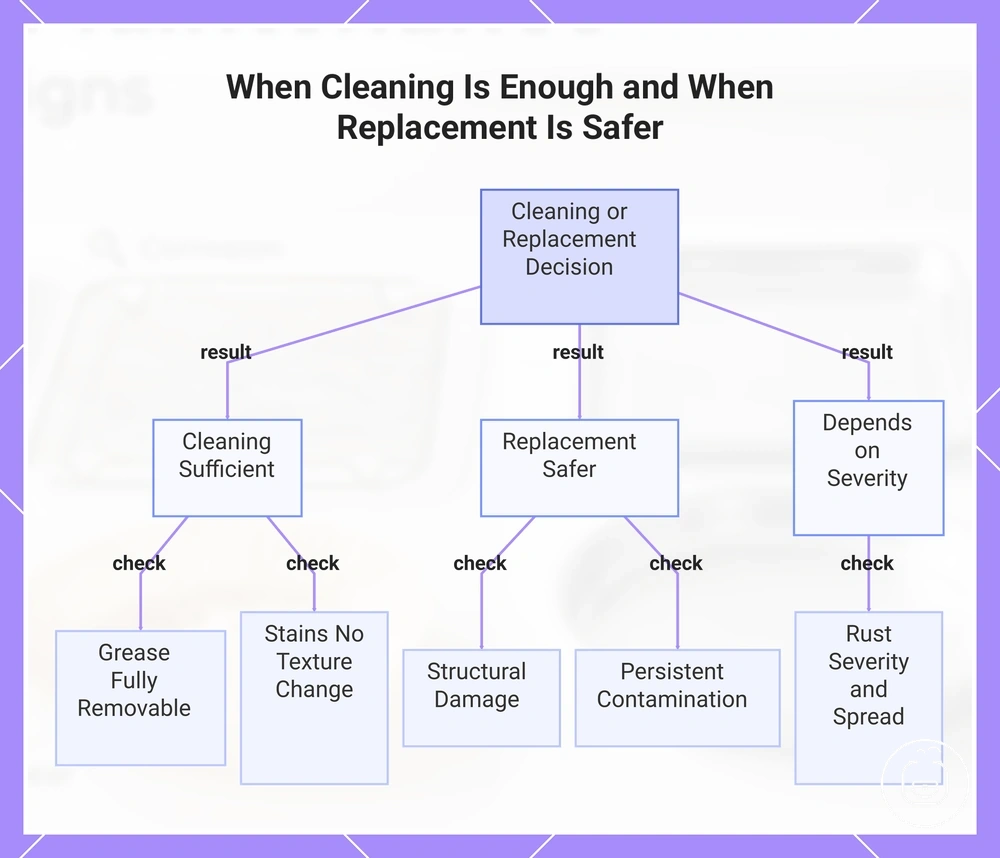
Cleaning is enough when grease, residue, or stains can be removed without affecting surface integrity, fit, airflow, or coating condition, while replacement is safer when damage changes material structure or prevents reliable performance during use.
The decision between cleaning and replacement depends on whether repeated cleaning restores normal condition or whether issues like coating wear, cracks, rust, warping, odors, or stuck residue continue to affect function. This evaluation connects with cleaning and grease control as a reference point for distinguishing removable buildup from deeper material breakdown.
- Grease buildup that removes fully after cleaning → cleaning may be sufficient
- Removable stains that do not change surface texture → cleaning is usually enough
- Stuck residue that persists after repeated cleaning → replacement may be safer
- Odors that remain after multiple cleaning cycles → possible material absorption
- Coating failure exposing base material → replacement is often required
- Cracks or structural breaks → replacement is necessary for safety and stability
- Rust formation affecting surface areas → depends on severity and spread
- Warping that affects fit or airflow → replacement is likely needed
This chart shows the decision criteria for choosing between cleaning and replacement based on specific material conditions.
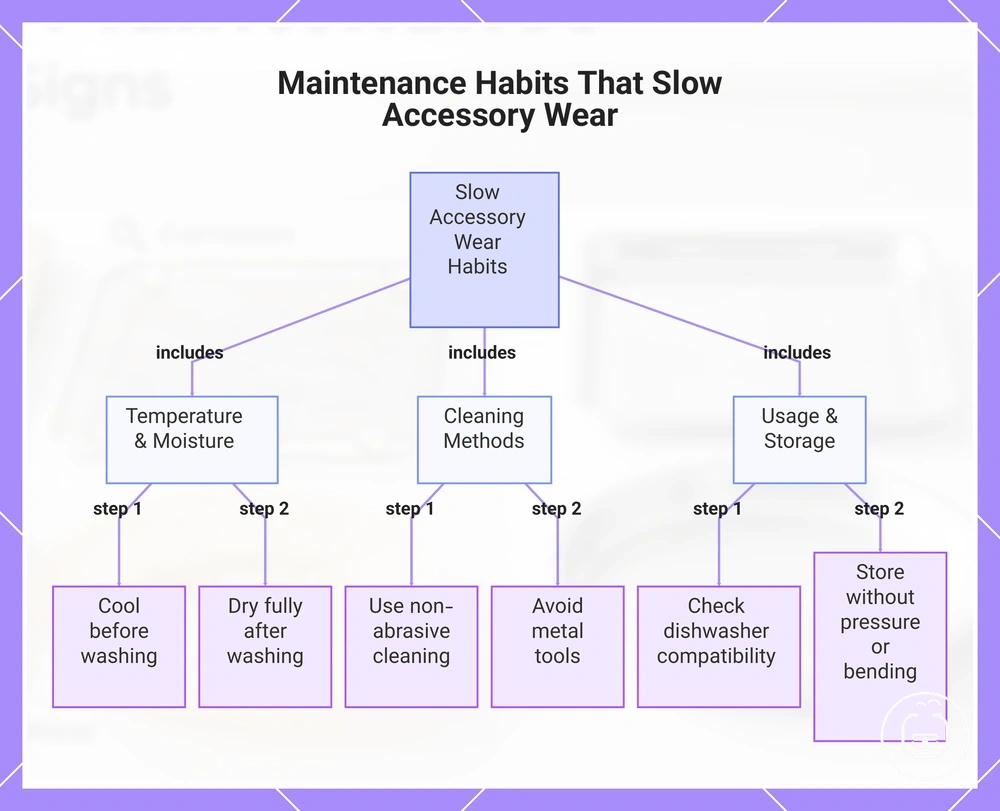
Maintenance Habits That Slow Accessory Wear
Maintenance habits that slow accessory wear are routine care actions that reduce heat stress, surface abrasion, and structural strain on air fryer accessories, helping them maintain stable performance over repeated use.
These habits do not prevent wear completely but can reduce the rate of coating degradation, shape distortion, and corrosion risk when applied consistently over time.
- Cooling accessories before washing to reduce thermal shock that may weaken coatings or cause shape distortion
- Using non-abrasive cleaning methods to help preserve surface layers and reduce scratching over repeated cycles
- Avoiding metal tools on coated surfaces to reduce the risk of coating damage and early surface exposure
- Checking dishwasher compatibility labels to avoid conditions that may accelerate coating or material breakdown
- Drying fully after washing to reduce moisture retention that can contribute to odor buildup or corrosion in metal parts
- Storing without pressure or bending to help maintain original shape and reduce long-term structural deformation
This chart groups the key maintenance habits that reduce heat stress, surface abrasion, and structural strain on air fryer accessories, helping them last longer.
Dishwasher cycles, heat exposure, and abrasive cleaning
Dishwasher cycles, heat exposure, and abrasive cleaning describe routine cleaning conditions that can accelerate wear in air fryer accessories by affecting coatings, surface stability, and material structure over repeated use.
These routine actions interact differently with each material type, especially when dishwasher detergents, high-temperature drying, and mechanical friction from sprays, racks, or utensils are involved.
| Exposure type | Material response | Wear outcome |
|---|---|---|
| Dishwasher cycles | Coated metals and nonstick surfaces may gradually weaken depending on coating quality and cycle intensity | Increased risk of coating wear or reduced nonstick performance over time |
| Heat exposure | Silicone components may soften or deform under repeated high-temperature conditions | Shape changes or reduced structural stability in flexible parts |
| Abrasive cleaning tools or detergents | Rough pads and strong detergents may affect coated or polished surfaces differently | Surface scratching or faster coating degradation in sensitive materials |
Some accessories may be labeled as dishwasher-safe, but actual wear can still vary based on cycle intensity, temperature, and material quality. Manufacturer instructions and visible condition should take priority when evaluating long-term durability.
Drying, storage, and handling between uses
Drying, storage, and handling between uses refer to the post-wash stage where air fryer accessories remain exposed to moisture, stacking pressure, and physical contact that can influence shape stability and surface condition.
Moisture left after washing, uneven stacking, or unsafe handling can gradually contribute to rust in metal parts, deformation in silicone accessories, and scratches on coated surfaces, depending on material sensitivity.
- Ensure full drying before storage to reduce moisture that can contribute to rust formation in metal accessories
- Avoid stacking silicone parts under pressure to reduce long-term shape distortion
- Store nonstick plates without direct hard contact to help prevent surface scratching
- Keep racks in stable positions to reduce bending or stress on structural joints
- Handle hot components only after cooling to reduce risk of deformation or accidental damage
Choosing Replacement Accessories After Wear Appears
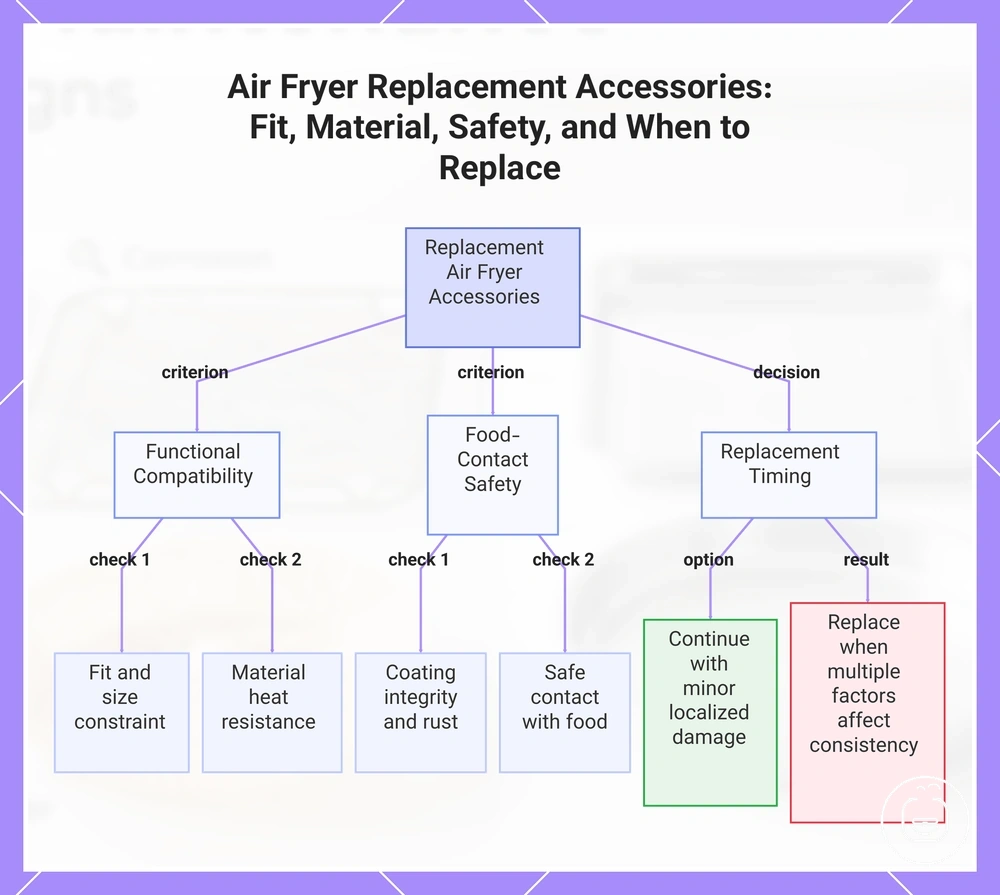
Replacement decisions for air fryer accessories depend on whether confirmed wear affects fit, structural stability, or food-contact safety rather than surface appearance alone. The selection process starts by clarifying what function has degraded and what the replacement must restore :contentReference[oaicite:0]{index=0}.
Fit and size define the first constraint, since the accessory must align with the basket or cooking chamber geometry. Even minor deviations in shape or diameter can affect airflow spacing or stability, so compatibility is usually evaluated by dimensions rather than visual similarity.
Material and heat resistance determine whether the accessory can withstand repeated cooking cycles without further deformation or coating breakdown. Silicone, coated metal, and rigid components may respond differently to heat exposure, so replacement choice depends on matching material behavior to the original use conditions.
Food-contact safety and surface condition become more relevant when wear affects coating integrity, rust formation, or persistent residue. In such cases, replacement is guided by whether the surface can still maintain stable and safe contact with food during repeated use.
Original parts and compatible alternatives may differ in construction, but selection is based on whether the accessory can still resolve the specific wear problem without introducing new fit or performance issues. Any compatibility assumption remains conditional and dependent on model variation.
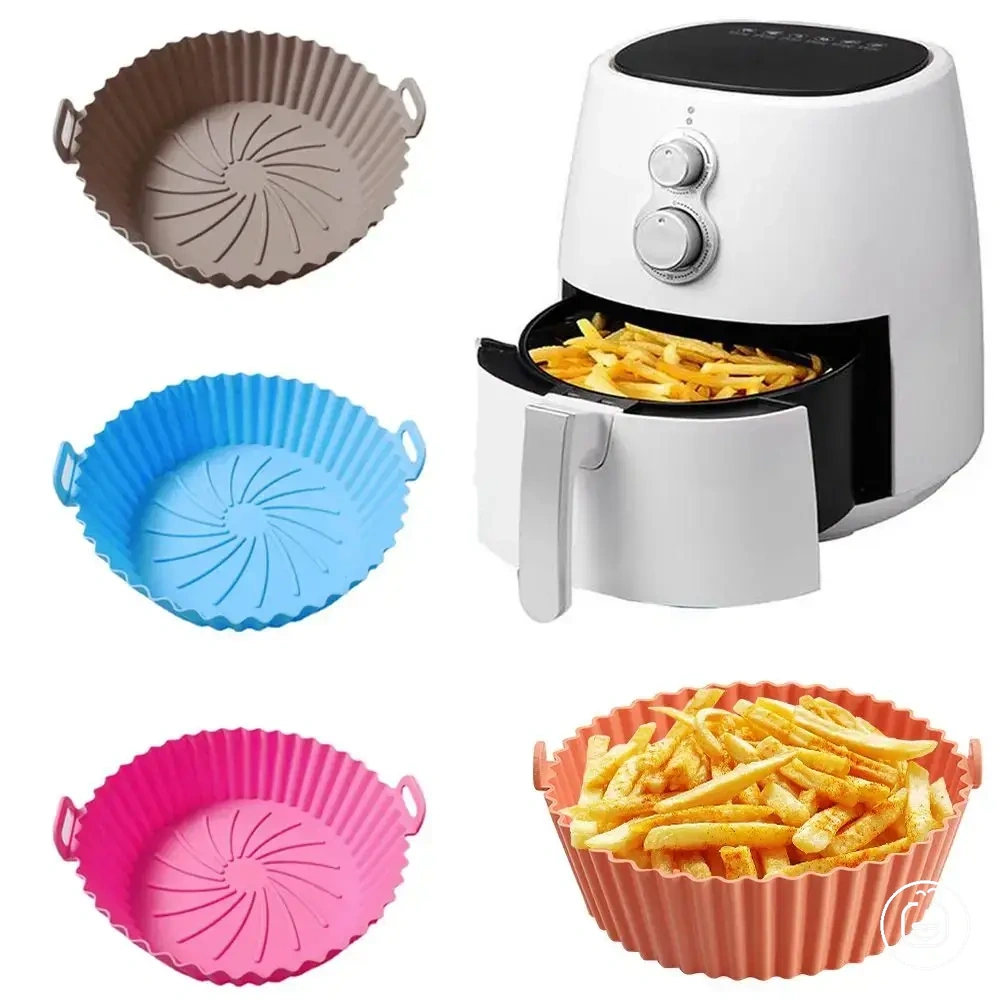
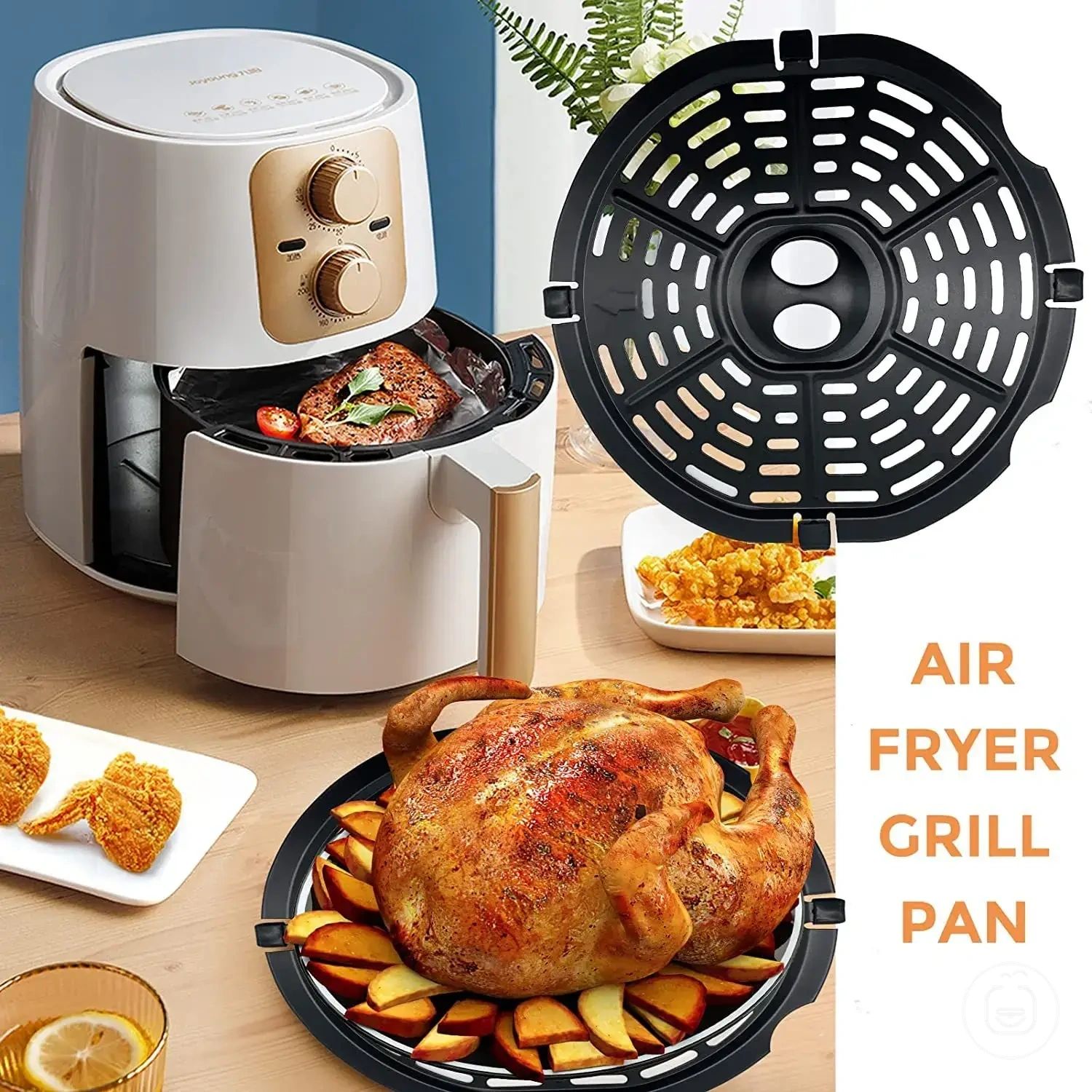
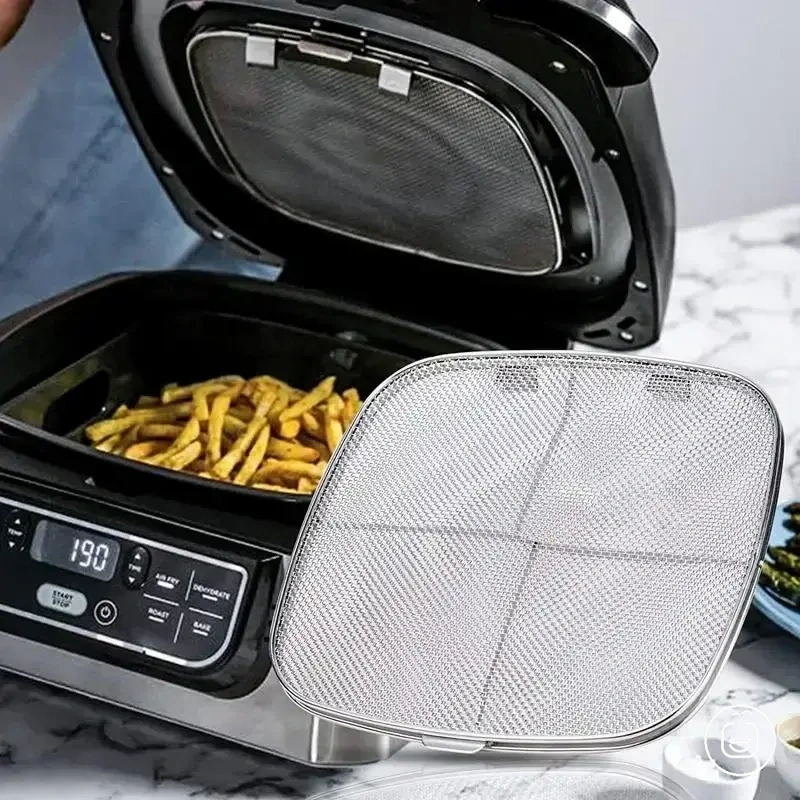
The products below are useful examples for comparing available options. Before buying, check that the compatibility criteria, key features, and product details match your needs.
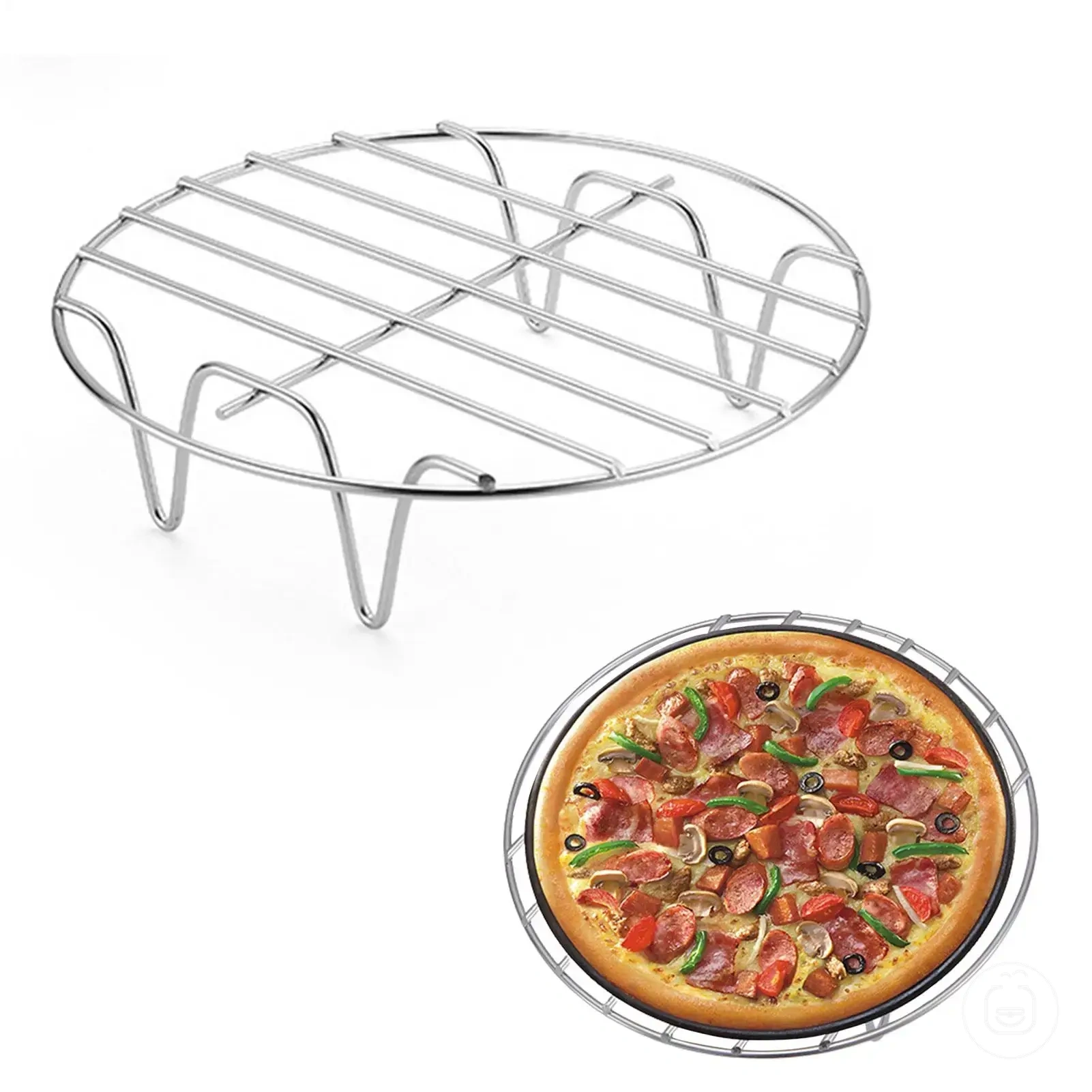
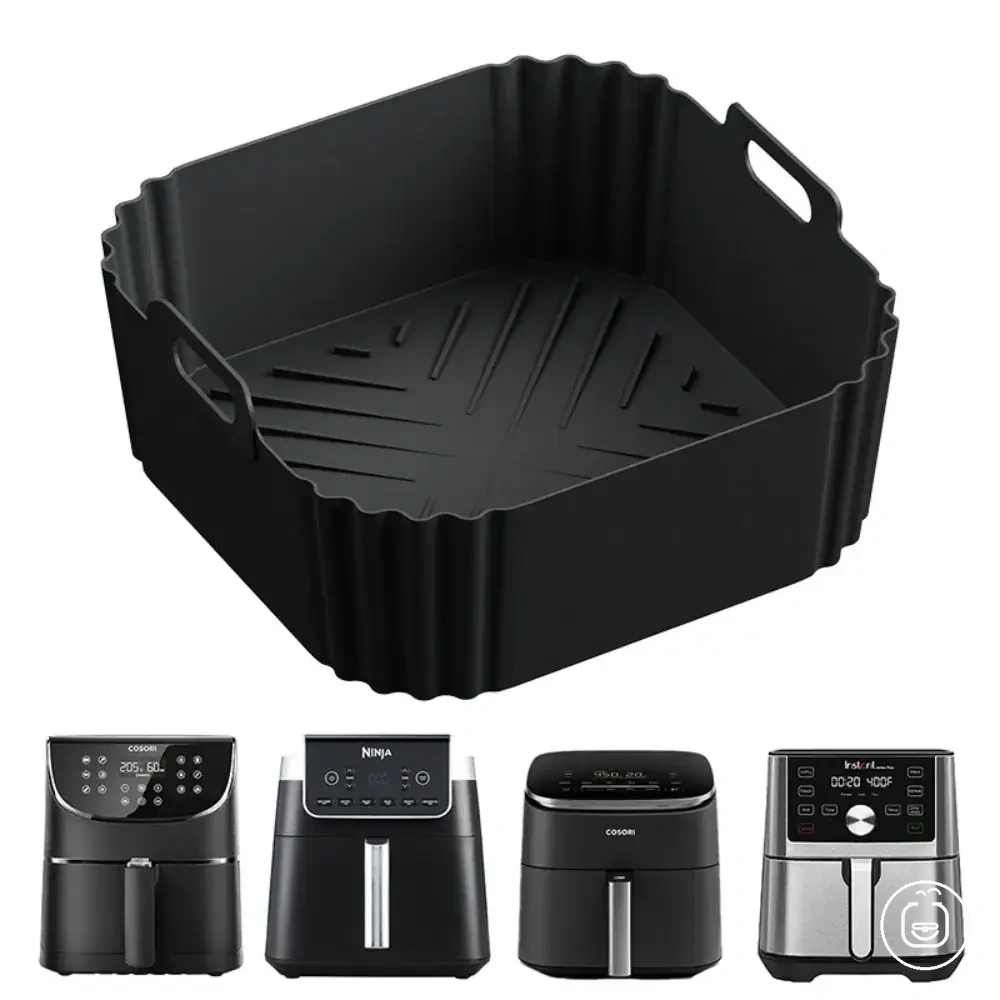
Continuing with a worn accessory may remain possible when damage is minor and localized, but replacement becomes more relevant when multiple wear factors begin affecting cooking consistency or structural reliability during use.
This chart shows the key criteria for selecting replacement air fryer accessories—functional compatibility, safety, and replacement timing—along with the specific checks and decision points.